A recent viral post captured imaginations: The U.S. Navy maintains a vast forest in Indiana whose purpose includes keeping one wooden warship from 1797 seaworthy. The ship is USS Constitution—“Old Ironsides”—the world’s oldest commissioned warship still afloat, with an active-duty crew. Looking for local outings instead? See things to do in Prescott.
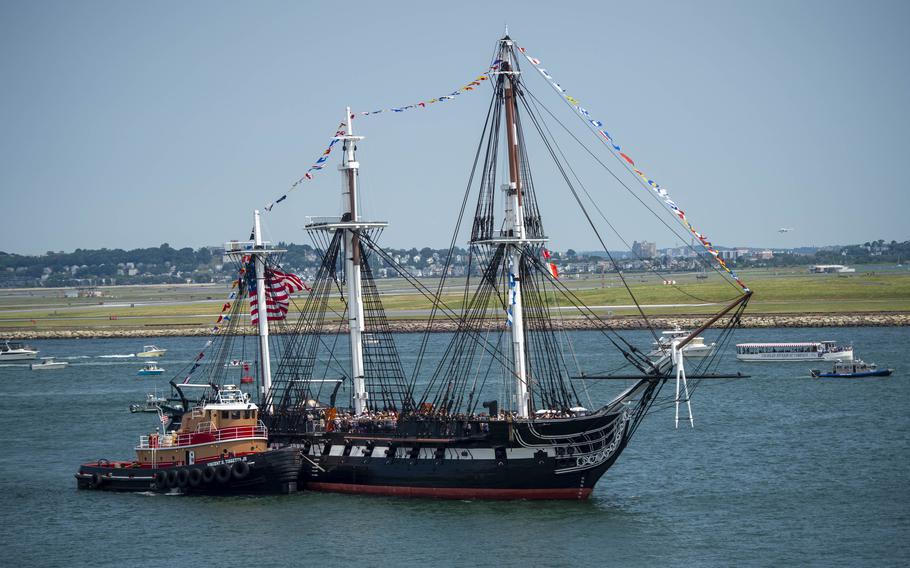
The story is even richer, more nuanced, and more inspiring than the headline suggests. It involves brilliant 18th-century naval architecture, the physics of dense oak under cannon fire, intergenerational forestry planning measured in centuries, the philosophical puzzle of the Ship of Theseus, and a living link to America’s founding that still sails, fires salutes, and welcomes visitors today.
A Ship Built to Last—and to Inspire. History-minded readers can browse more long-form pieces on the Bridge blog.
Authorized by the Naval Act of 1794 and launched on October 21, 1797, this legacy story sits alongside other community features on Bridge news. Constitution was one of six original frigates designed by Joshua Humphreys to protect American commerce and project power in a dangerous world. She was built tough: heavy live oak frames (ribs) sandwiched between inner and outer layers of white oak planking, creating a composite hull wall up to 21 inches thick in key areas. The wood was exceptionally dense. During the War of 1812, British 18-pounder cannonballs often bounced off or embedded harmlessly, leading a sailor to declare her sides were “made of iron.” The nickname “Old Ironsides” stuck.
Her most famous victory came on August 19, 1812, when she defeated HMS Guerriere in a fierce engagement. That triumph—and others—boosted morale for a young nation and proved the U.S. Navy could stand against the world’s dominant maritime power. She continued serving in various capacities through the 19th and 20th centuries before transitioning to her current role as a ceremonial and educational flagship.
Today she remains in active commission, berthed at Pier 1 in the Charlestown Navy Yard (part of Boston National Historical Park). Her crew consists of active-duty U.S. Navy sailors who conduct free public tours, participate in ceremonies, and occasionally take her underway for sails and 21-gun salutes in Boston Harbor.
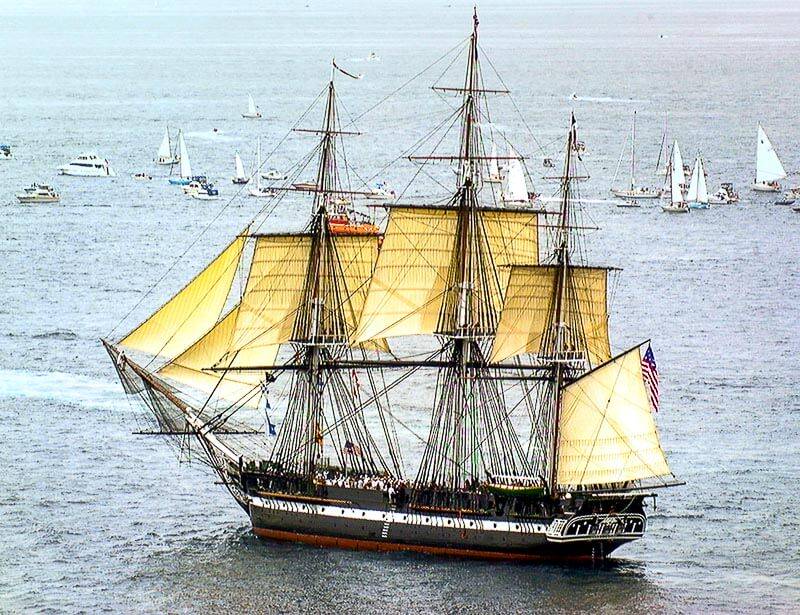
The Indiana Connection: Constitution Grove at NSA Crane
The viral post highlighted a practical problem with owning a 229-year-old wooden ship: you cannot simply order replacement parts from a lumberyard. Hull planks can run 30–40 feet long and 7+ inches thick, cut from single, straight, mature white oak trunks. A suitable white oak takes well over a century to grow large enough.
The Navy’s solution is elegant and forward-looking. In 1976, a ceremonial “Constitution Grove” was dedicated at Naval Support Activity (NSA) Crane in southern Indiana. One hundred and fifty white oak trees across the large base were specifically designated for the ship. Foresters manage these and other suitable trees with long-term planning—selecting, monitoring, and harvesting mature specimens for future restorations.
Important nuance: NSA Crane is a major naval installation (roughly 50,000–64,000 acres) primarily focused on ordnance testing, storage, and related missions. It is not a forest “whose entire job” is one ship. Constitution Grove is a dedicated ceremonial and resource section within it. Trees are sustainably managed alongside environmental considerations (for example, timing harvests to protect the endangered Indiana bat). Previous restorations sometimes sourced wood commercially or from donations (such as live oak after Hurricane Hugo), but Crane has become the primary, reliable supplier of the specific white oak needed.
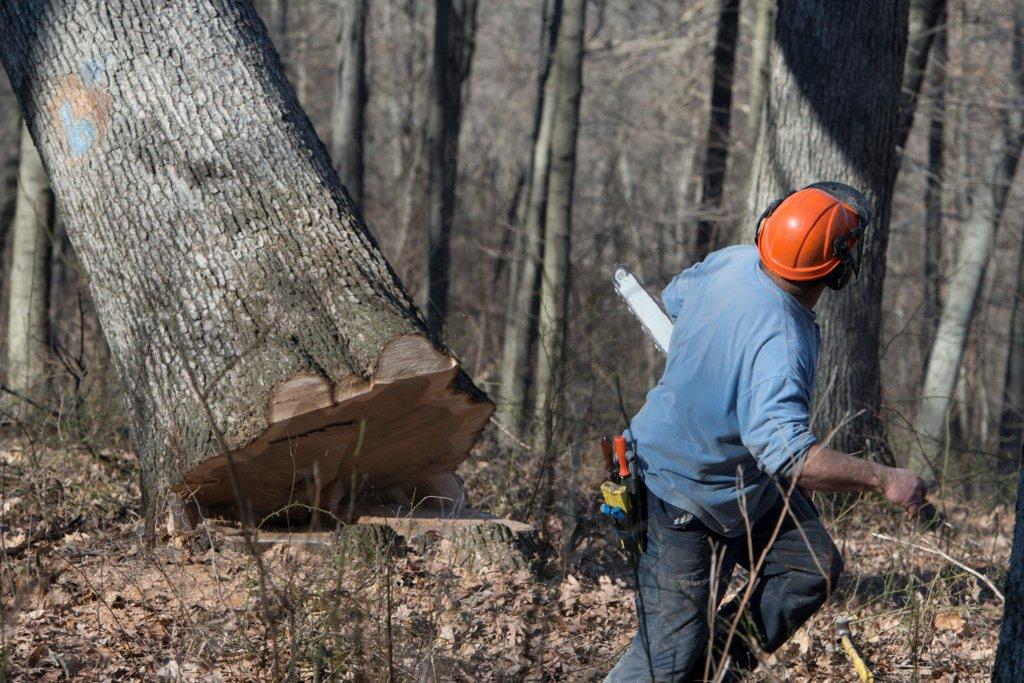
In one documented case, Navy personnel visited in 2012, assessed GPS-tagged trees, selected 35 suitable ones from 70 examined, and harvested them in 2014 for the 2015–2017 restoration. The logs were specially processed and stored until needed in Boston. This is forestry operating on “tree time”—planting and tending today for planks that may be installed in the 2100s.
Restoration, Renewal, and the Ship of Theseus
Constitution undergoes major restorations roughly every 20 years. She enters dry dock, rotted or deteriorated timbers are replaced plank-by-plank by skilled shipwrights, and she returns to service.

Estimates of original 1797-era wood vary, but informed assessments from the Naval History and Heritage Command Detachment Boston place it around 8–15% (depending on the exact definition of “original material” from the 1794–1797 build period). The keel and lower structure tend to retain more older wood. Successive rebuilds (notably the extensive 1927–1931 work that renewed about 85% of the ship, and later projects) have kept her strong and seaworthy.
This raises the classic philosophical question known as the Ship of Theseus: If every part is eventually replaced, is it still the same ship? For Constitution, the answer embraced by the Navy, Congress, historians, and the public is yes. Her identity resides in the unbroken chain of service, the design, the name, the mission, the crew’s stewardship, and the national decision to preserve her as a commissioned warship rather than a static museum piece or replica. She is continuously renewed while remaining authentically herself—a powerful metaphor for institutions, traditions, and nations that endure by adapting without losing their core.
Why This Story Resonates Today
In an age of rapid technological obsolescence and short-term planning, Constitution and her Indiana forest represent something rare: deliberate, multi-generational investment in heritage, craftsmanship, and national identity.
- Skills preservation: Traditional shipwrighting, timber selection, and wooden ship maintenance are kept alive.
- Educational impact: Active-duty sailors serve as living interpreters. Visitors (hundreds of thousands annually) walk her decks and connect directly with history.
- Symbolic power: She is “America’s Ship of State”—a tangible reminder of early American ingenuity, resilience, and resolve.
- Sustainable thinking: The Navy practices long-horizon resource management on military land, balancing mission needs with environmental stewardship.
Nuances exist, of course. Preservation requires ongoing funding and public support. Climate change, forest health, and shifting priorities could affect future wood supplies (though current management appears robust). And while Constitution long held a unique distinction among active U.S. warships for having sunk enemy vessels in combat (War of 1812), modern naval operations have seen other vessels achieve combat successes as well. Her place in history remains singular as the oldest commissioned warship afloat and a continuous symbol.
Visit, Learn, and Reflect
If you’re near Boston, tour the ship (free, guided by sailors) and visit the excellent USS Constitution Museum next door. Watch for her occasional sails in Boston Harbor—she still moves under wind and sail power. Many resources exist for deeper dives:
Key Resources & Further Reading
- USS Constitution Museum (official site with history, restoration details, and visitor info): ussconstitutionmuseum.org
- Naval History and Heritage Command pages on Constitution
- Boston National Historical Park (NPS): Information on the Charlestown Navy Yard and ship
- The “Wooden Walls” article detailing Constitution Grove and 2015-era restoration planning: ussconstitutionmuseum.org/2015/05/11/the-wooden-walls/
- Comprehensive overview: Wikipedia “USS Constitution” (well-sourced starting point)
The viral tweet got one thing profoundly right: this is a story worth sharing. It’s not just about a quirky government program or a very old boat. It’s about foresight, craftsmanship, national memory, and the quiet work of people—foresters in Indiana, shipwrights in Boston, sailors on deck—who ensure that a piece of 1797 America still sails into the future.
Stand on her decks if you can. Or simply appreciate that, thanks to a dedicated grove of white oaks and centuries of care, Old Ironsides continues to remind us what enduring strength looks like.